

Types of Easements Every Property Owner Should Know
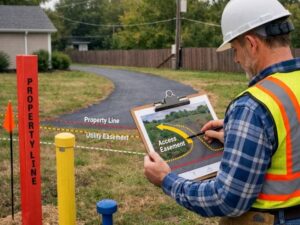
An easement is a legal right that lets someone use part of your land for a specific purpose, even though you still own the property. Common examples include a power company maintaining lines on your lot or a neighbor crossing your driveway to reach their home. Easements can affect how you use your land, so every property owner should understand them.
When you buy a property, you expect to control who uses it. But many properties come with easements already in place. These rights can shape where you build, what you plant, and how much privacy you have. Knowing how easements work helps you avoid surprises and protect the value of your land.
How an easement works
An easement gives a person or company the right to use part of your property without owning it. You keep ownership and can still use the land yourself. You simply cannot block the easement holder from doing what the agreement allows.
The land that carries the easement is called the servient estate. The party that benefits from it is called the dominant estate. For example, if your neighbor has the right to cross your land to reach the road, your property is the servient estate and theirs is the dominant estate.
Easements are usually recorded along with the property deed. That means they often stay with the land even after it is sold. If you buy a home with an easement, you typically inherit it.
Why easements matter to property owners
Easements affect three things most owners care about: how you use your land, your privacy, and your property value.
You may not be able to build, fence, or plant in certain areas. A utility easement, for instance, can stop you from putting a structure or a large tree over buried lines. You may also see workers enter your property to make repairs.
The effect on value depends on the type and location of the easement. A common utility easement that runs along the edge of a lot usually has little effect on value. A restrictive easement that limits building or cuts through the middle of a property can lower it. Conservation easements, which block most development, can reduce land value sharply, by as much as 35 to 65 percent according to one Journal of Forestry study.
Common types of easements
Easements come in several forms. Here are the ones property owners meet most often.
Utility easement
A utility easement lets companies install and maintain services like electricity, water, sewer, phone, and cable. These are very common because it is far easier to run lines straight through neighborhoods than around each lot. Most buyers accept them as a normal part of owning a home.
Access easement
An access easement gives someone the right to cross your land to reach their own. This often happens with landlocked property that has no direct road access. A shared driveway is a frequent example.
Right-of-way easement
A right-of-way easement allows people to pass through a property using a road, path, or sidewalk. In some cases it serves the general public, such as a public road that crosses private land.
Drainage easement
A drainage easement protects the natural flow of water across properties. It allows ditches and storm systems to carry water and prevents owners from building anything that blocks the flow.
Conservation easement
A conservation easement limits land use to protect natural resources. It is usually held by a land trust or government agency and blocks certain types of development to preserve open space or wildlife habitat.
Two ways to group easements
Beyond their purpose, easements fall into two legal groups. Knowing these terms helps you read your property documents.
An easement appurtenant is tied to the land itself. It benefits one property and burdens another, and it transfers to new owners when either property is sold. A shared driveway between two neighbors is a classic example.
An easement in gross is tied to a person or company rather than the land. A utility easement is the common case. These do not always transfer when a property changes hands unless the agreement says so.
How easements are created
Easements can be formed in a few different ways.
- Express easement: created through a written agreement between the property owners. This is the most common type.
- Easement by necessity: created when a property would otherwise have no legal access, such as a landlocked lot. These are often ordered by a court.
- Prescriptive easement: gained when someone uses part of a property openly and continuously for a long period, sometimes without the owner’s permission.
Because the rules vary by state, it is wise to review any easement carefully before you buy or sell.
How to find out if a property has an easement
The best place to start is the property title. When you buy a home, a title search usually reveals any recorded easements. You can also check records at your county recorder or assessor’s office.
A licensed land surveyor can identify recorded easements on the ground and show exactly where they sit. This is one reason a survey is so useful before a purchase or a building project. It tells you not just where your lines are, but what rights others may hold on your land.
Frequently asked questions
Can I remove an easement from my property?
Sometimes, but it is not easy. An easement may end if both parties agree in writing, if it is no longer needed, or through a legal process. Because rules differ by state, speak with a real estate attorney about your options.
Does an easement mean I do not own that part of my land?
No. You still own the land. An easement only gives someone the right to use part of it for a set purpose. You keep ownership and can use the area yourself as long as you do not block the easement holder.
Do easements lower property value?
Not always. Common utility easements along a lot’s edge often have little effect. Easements that restrict building or sit in prime areas can lower value, while access easements that add usefulness can sometimes raise it.
Are easements permanent?
Many are. Because easements are usually recorded with the deed, they often stay with the property when it is sold. Some, such as easements in gross, may end under certain conditions